
Likkutei Sichos: Volume 4 - Rosh Hashanah

Likkutei Sichos, Vol. 4: Rosh Hashanah (Part 1)
Opening a study of one of the Rebbe's most foundational sichos on Rosh Hashanah, based on Rav Saadia Gaon, this shiur works through why Chazal's language -- 'the ten days between Rosh Hashanah and Yom Kippur' -- must mean that Rosh Hashanah and Yom Kippur are both included in, and excluded from, the Aseres Yemei Teshuvah. The resolution points to an essential dimension of these days that stands above and prior to teshuvah itself. A lengthy excursus follows on whether teshuvah is counted among the taryag mitzvos, tracing the dispute between the Minchat Chinuch and the Alter Rebbe's Iggeres HaTeshuvah, and including a firsthand exchange with Rabbi Soloveitchik on the same question.

Likkutei Sichos, Vol. 4: Rosh Hashanah (Part 2)
Continuing the analysis of Rosh Hashanah's two dimensions, this shiur first explains what a pegam from an aveira actually is -- using a Krazy Glue mishap and the danger of treifah as poison -- and why only something higher than mitzvos, namely teshuvah, can repair it. It then works through the Gemara's statement that Malchuyos, Zichronos, and Shofaros exist so that Hashem should be accepted as Melech, establishing kabbalas ol malchus shamayim as prior to and higher than both mitzvos and teshuvah, on the model of a father-son bond that holds regardless of behavior. The shiur closes with the Alter Rebbe's chiddush in Iggeres HaTeshuvah that true teshuvah for a single aveira requires renewing one's entire acceptance of Hashem's kingship, not merely resolving not to repeat that sin.

Likkutei Sichos, Vol. 4: Rosh Hashanah (Part 3)
Resolving yesterday's question, the shiur explains the Rambam's rule that a mitzvah combining machshavah and maaseh is counted in the Taryag only by its spoken or active component, which is why vidui, not teshuvah itself, appears in the Rambam's list. Turning back to the sicha, it distinguishes ratzon from etzem: mitzvos connect a Yid to Hashem's will, teshuvah reaches higher to fix a breach in that will, but kabbalas ol malchus on Rosh Hashanah touches Hashem's essence itself, unconditioned by will or behavior, much like the bond between a father and a child that holds regardless of conduct. The shiur closes by reviewing Rav Saadia Gaon's reasons for shofar and opening a new sicha on how the very name 'Rosh Hashanah' reveals the character of the day.

Likkutei Sichos, Vol. 4: Rosh Hashanah (Part 4)
After running through Rav Saadia Gaon's ten reasons for shofar, the shiur explores how a Torah name reveals a thing's essence -- illustrated by Rabbi Meir's scrutiny of a stranger's name -- and applies this to why Rosh Hashanah is called 'the head' of the year: a head is supreme in itself, gives life to the whole body, and governs it, paralleling the day's own essence, its teshuvah, and its influence over the entire year's mitzvos. The shiur closes by showing how the single mitzvah of shofar encodes all three dimensions at once, capped by Rabbi Soloveitchik's story of his childhood melamed trembling not from fear of judgment but from awe at 'the coronation of the Eibershter.'
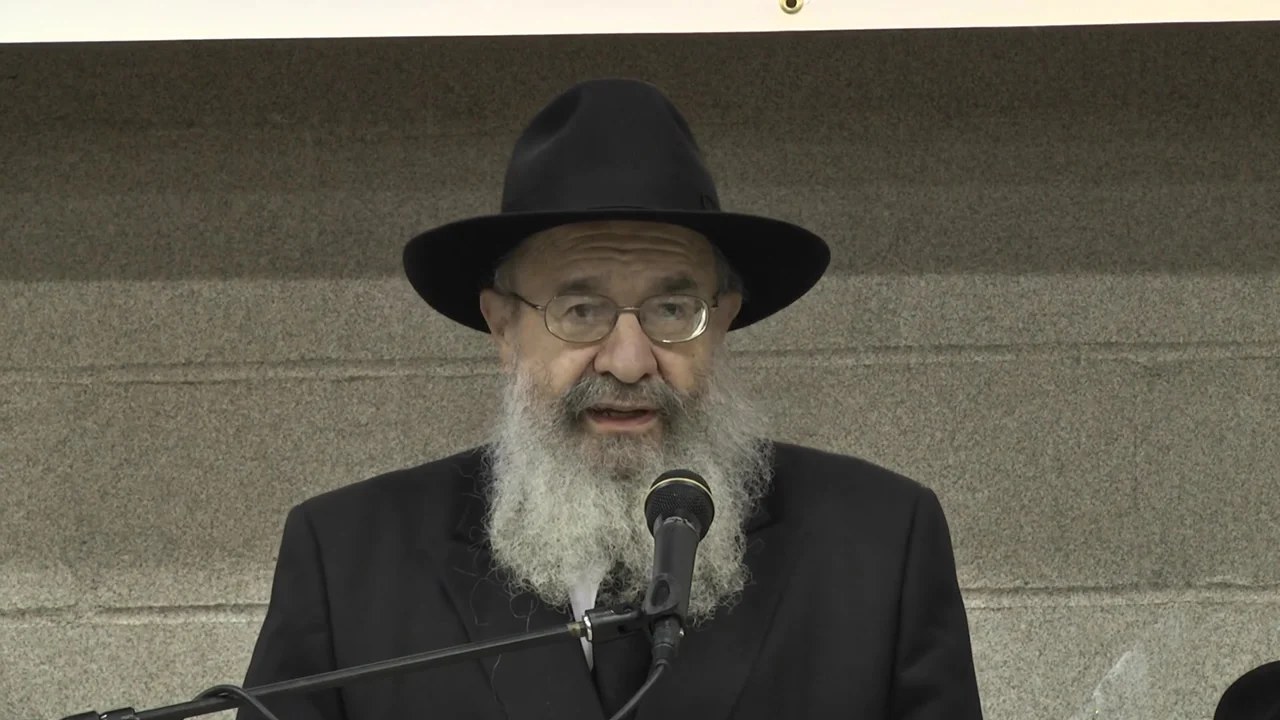
Likkutei Sichos, Vol. 4: Rosh Hashanah (Part 5)
Working out a precise Rambam puzzle -- why the reason for shofar appears in Hilchos Teshuvah rather than Hilchos Shofar, paralleled by why the reason for mikveh appears in Hilchos Mikvaot rather than Hilchos Teshuvah -- the shiur uncovers three distinct layers within the single mitzvah of shofar: the halachic mitzvah itself, a remez pointing to teshuvah, and an unwritable dimension of pure malchus that lies beyond even remez. A wide-ranging digression on how meaning can live in a look, a crown atop a letter, or a trop illustrates why some truths can only be hinted at, never spelled out. The shiur concludes by explaining the verse 'Yivchar lanu et nachalateinu' recited before shofar: Hashem's choosing of the Jewish people is true free choice, rooted in essence rather than merit, which is why it is said before the shofar is even blown.